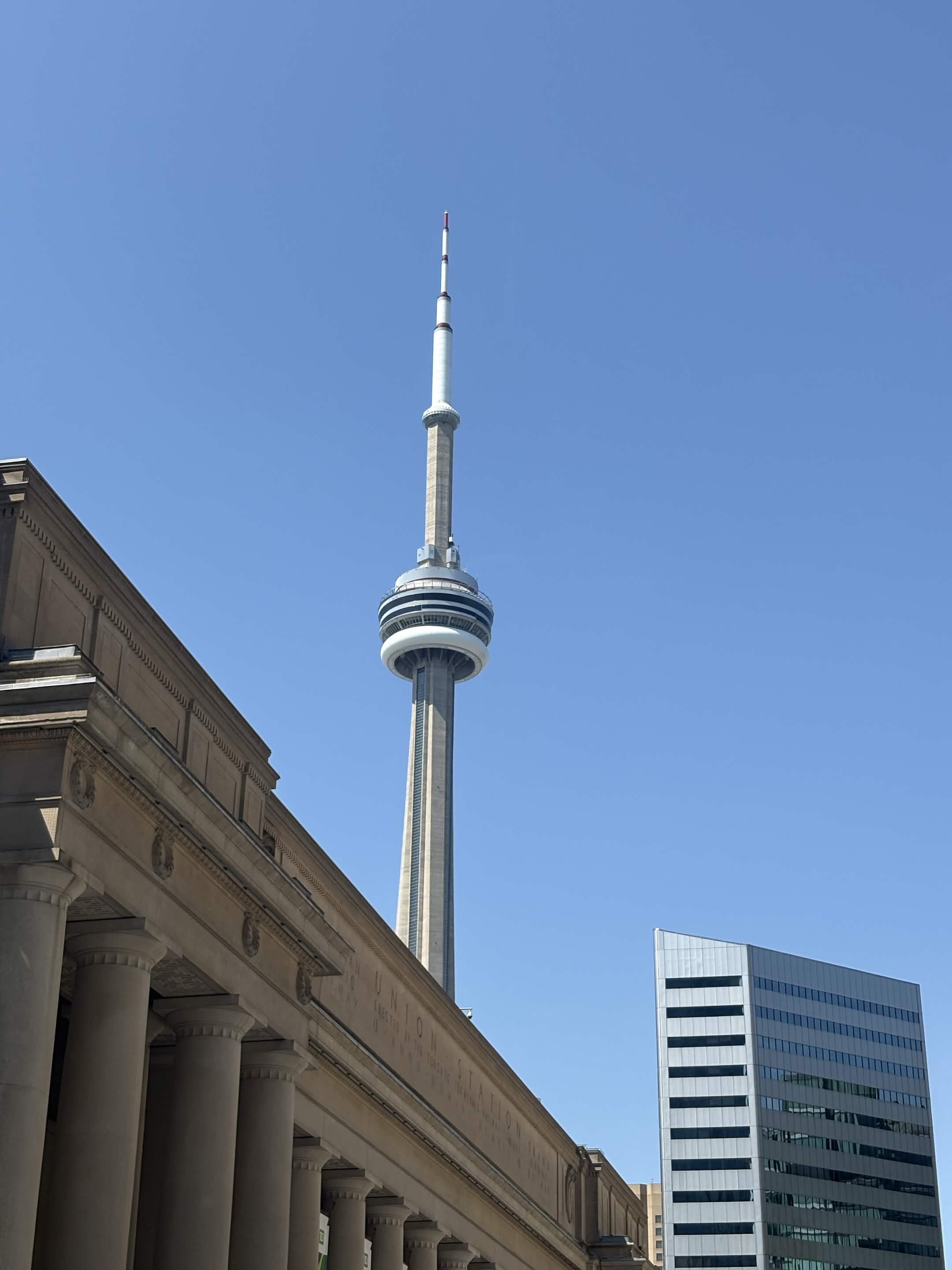
Toronto Tech Week runs May 24-29. Thousands of founders, engineers, and investors descend on downtown Toronto for a week of panels, parties, and pitches. Booths at the official events start at a few thousand dollars. Sponsorships go higher.
I had none of that. What I had was a car, a hardware store receipt, and the conviction that if you can't outspend them, you can out-weird them.
Here's what we did.
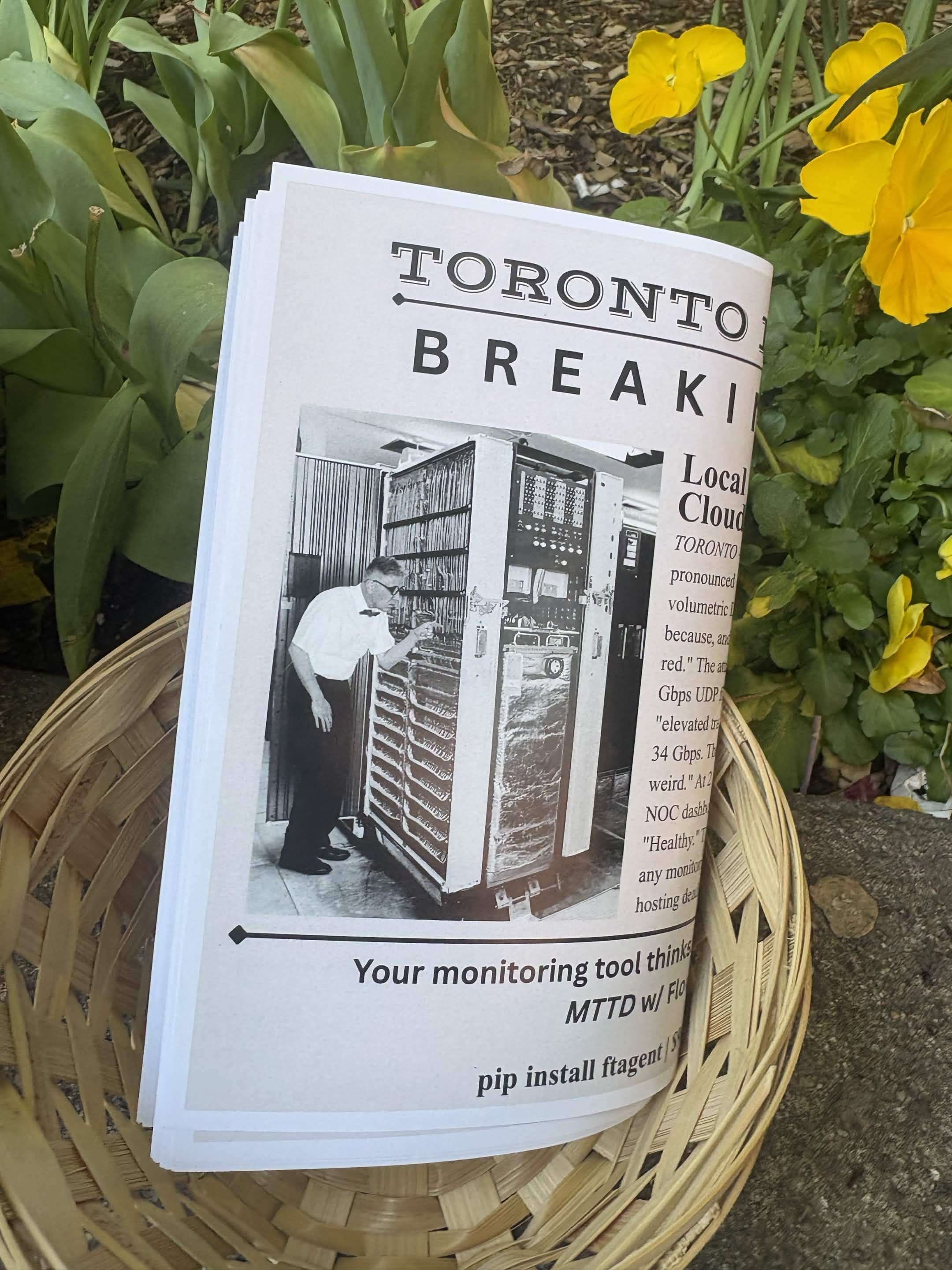
The DDoS Times
We printed a fake newspaper. Broadsheet format, newsprint stock, full headlines. "The DDoS Times" across the top in old-school serif. Stories about volumetric floods, infrastructure outages, and a surprisingly detailed feature on why your monitoring tool probably can't detect a 2 Tbps attack.
Left baskets of them around MaRS and the Discovery District innovation campuses. People picked them up because they looked real. People read them because the content was actually good.
The Red Phone
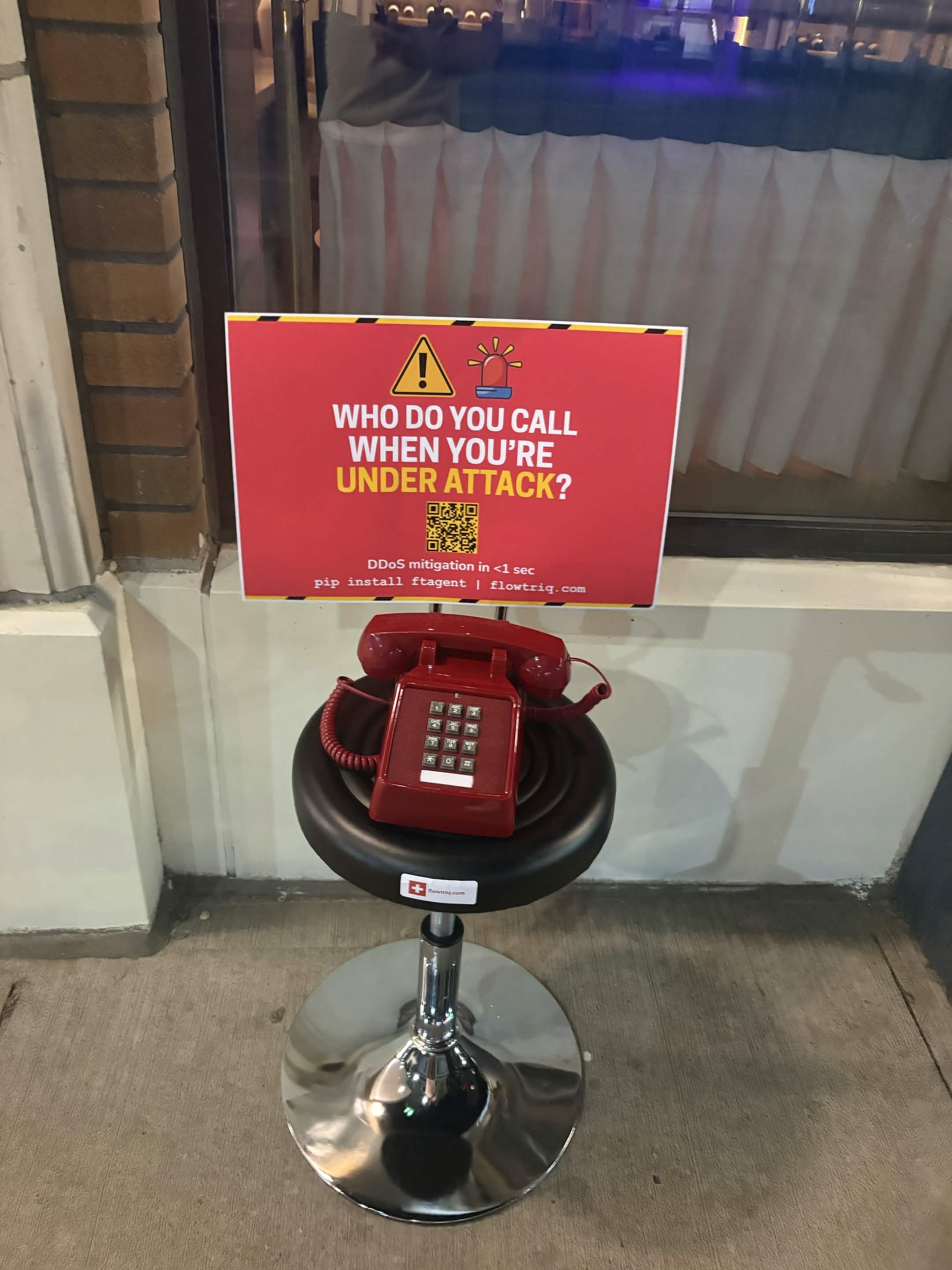
A red phone on a chrome stool. Corner of King and Peter, right by the Hyatt Regency where half the week's events happen. A hazard-style sign behind it: "WHO DO YOU CALL WHEN YOU'RE UNDER ATTACK?" with a QR code and "DDoS mitigation in <1 sec" underneath.
Nobody expects a red phone on a street corner in 2026. That's the point. People stopped. People took photos. People scanned the code.
The Server Tomb
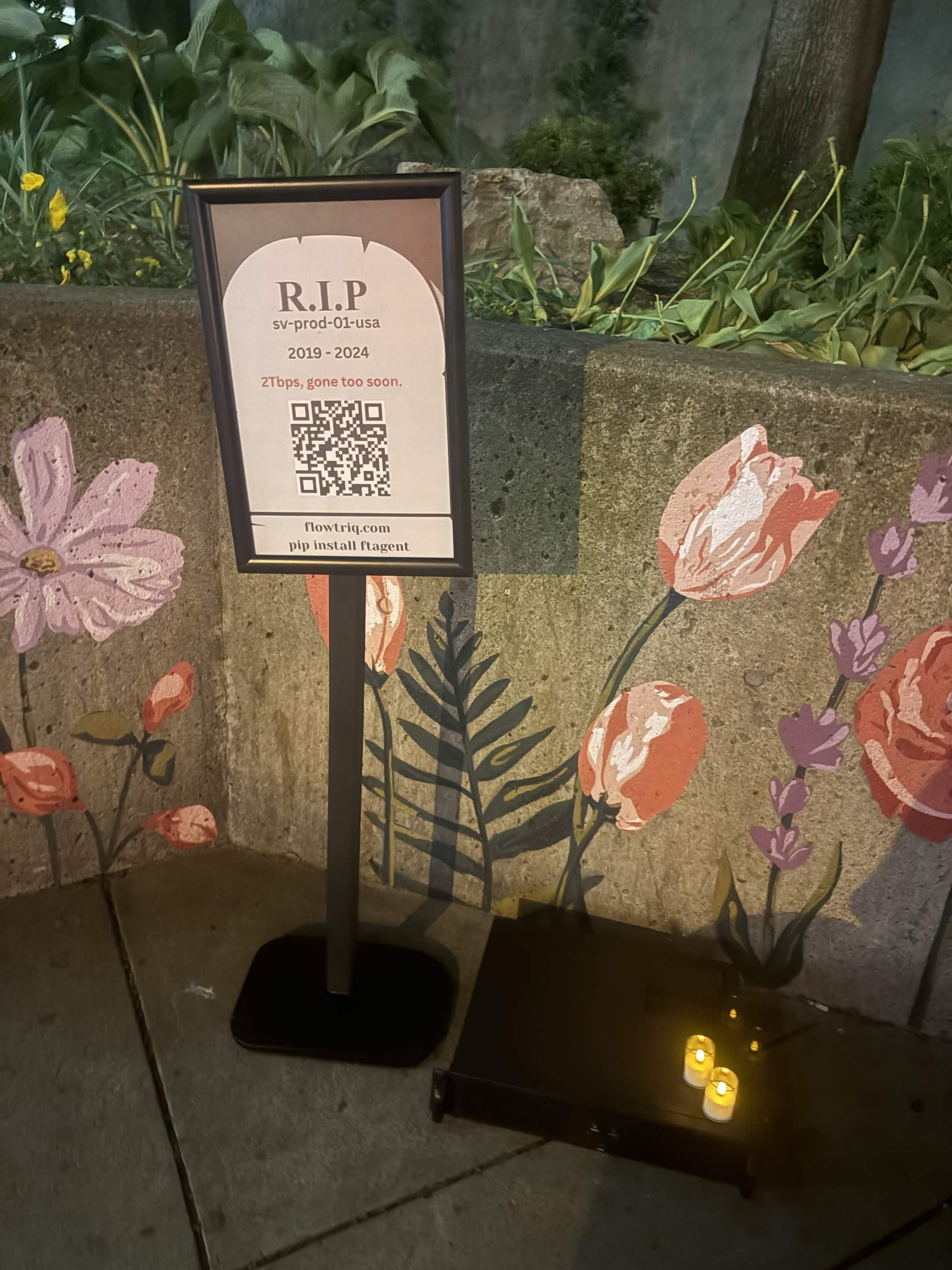
A tombstone-shaped sign on a stand outside 151 Front Street West. A gutted 2U server chassis on the ground beneath it. Battery-powered candles flickering around it. The sign read:
R.I.P. sv-prod-01-usa
2019 - 2024
2 Tbps, gone too soon.
A QR code on the tombstone pointing to flowtriq.com. Confused pedestrians, and network engineers who got the joke immediately.
Why 151 Front St?
If you work in networking in Canada, you know this building. 151 Front Street West is Canada's largest carrier hotel. It houses TORIX (the Toronto Internet Exchange), Equinix, Cologix TOR1, Digital Realty, and dozens of ISPs and carriers. Every major Canadian network peers through this building. If you're a network engineer in Toronto, you've walked through that lobby.
Putting a dead server on the sidewalk outside the building where half the country's internet traffic gets exchanged was a deliberate choice. The people walking past that tombstone are exactly the people who've lost a server to a DDoS attack at 3 AM and know what the tombstone means.
Server First-Aid Kits
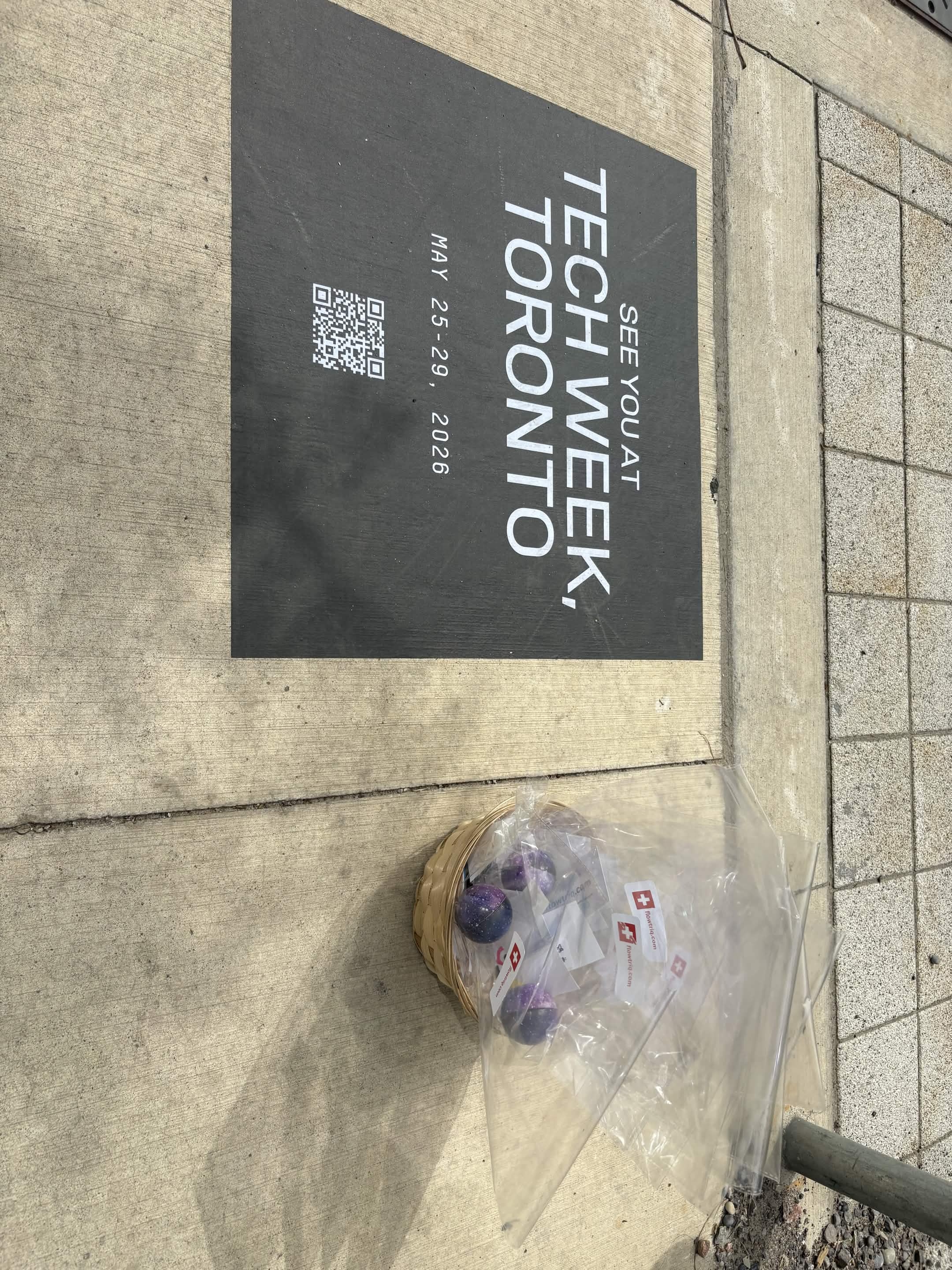
Branded goody bags left in baskets around MaRS, the Discovery District, and event venues throughout the week. Stress balls, keychains, laptop stickers, a promo code, and an "Under DDoS?" quick-reference card with response tips inside each one. Lightweight, easy to grab. The kind of stuff that sits on someone's desk for weeks and reminds them you exist every time they glance at it.
It worked
Someone posted the server tomb to Reddit. The folks who actually work at 151 Front chimed in.
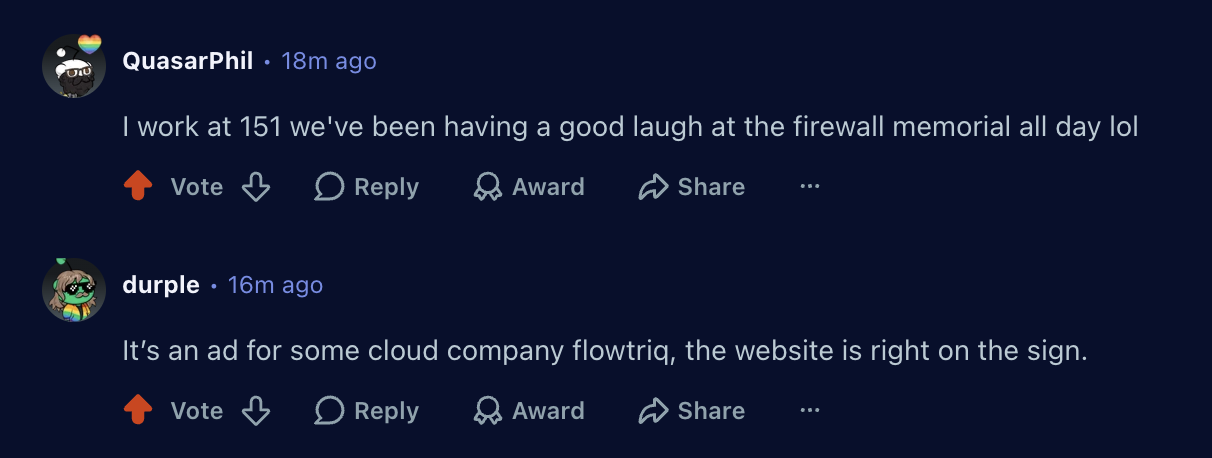
"I work at 151 we've been having a good laugh at the firewall memorial all day lol." That's the reaction you want. The people inside the building noticed.
Throughout the week, the campaigns drove sign-ups, new connections across Toronto's networking and infrastructure community, and real visibility into a space we hadn't been in before. Leads came in from hosting providers, ISPs, and MSPs who saw the setups or picked up a newspaper. For a bootstrapped company with zero ad spend, that's the whole point.
Why guerrilla?
Flowtriq is bootstrapped. No external funding, no marketing team, no agency. Just scrappy execution on a shoestring.
When you don't have budget, you have to have ideas. A printed sign on a stand, some battery candles, and a red phone from a thrift store will get you more conversations than a $5,000 booth if the idea is sharp enough. People don't remember booths. They remember the dead server with candles.
Every conversation this week started the same way: someone laughing, then asking what Flowtriq actually does. And then I'd tell them: sub-second DDoS detection, automatic mitigation, $9.99 a node. And they'd pull out their phone and scan the code.
That's the whole funnel. Make them laugh, then make them curious, then make it easy.
Try it
If you were at Tech Week and you're reading this because you scanned one of those QR codes: welcome. Here's the pitch without the tombstone.
Flowtriq detects DDoS attacks in under one second. It classifies the attack type, captures packets for forensics, fires alerts to your team, and auto-applies firewall rules to stop the flood. It works on bare metal, VMs, cloud instances, and routers. It costs $9.99 per node per month. Install takes 60 seconds:
curl -sSL https://flowtriq.com/install.sh | sudo bash
14-day free trial. No credit card. flowtriq.com
And if you still have your copy of The DDoS Times, keep it. It might be a collector's item someday.